
One of the biggest myths about Montessori is this:
“If kids get so much freedom, doesn’t that mean the classroom is chaotic?”
It’s a fair concern. Parents want their children to learn in a calm, respectful environment—not one where rules don’t exist.
But here’s the truth: Montessori schools handle discipline very differently—and very effectively. Let’s break it down.
1. Freedom within limits (not unlimited freedom)
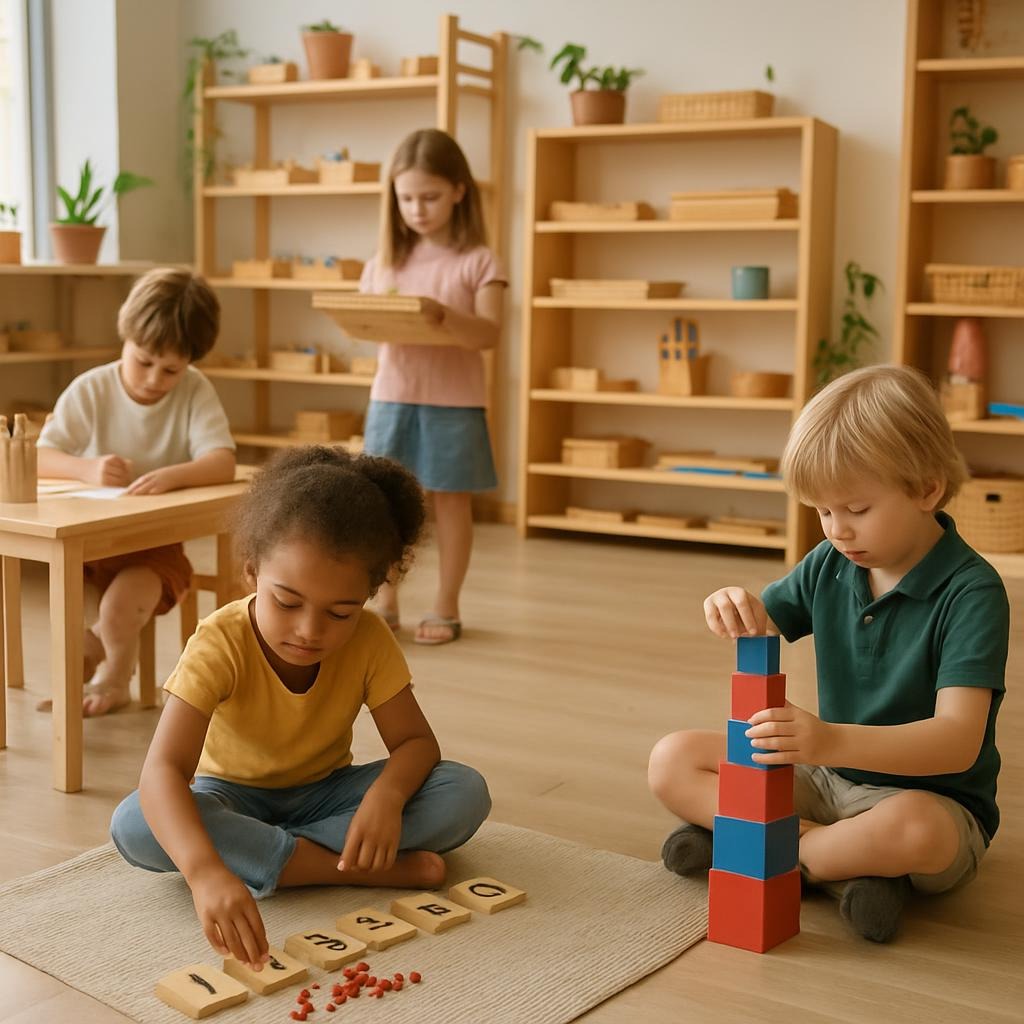
Montessori classrooms aren’t free-for-alls. Children do have choice, but that choice exists within clear boundaries.
- Kids can choose activities—but only from the prepared Montessori materials.
- They can move around—but must respect others’ space.
- They can work independently—but must return materials neatly when done.
This balance of freedom and responsibility helps children learn self-discipline instead of relying on constant external control.
2. Discipline is proactive, not reactive
Traditional schools often discipline after behavior goes wrong. Montessori takes the opposite approach.
Teachers create an environment where misbehavior is less likely by:
- Designing classrooms that meet developmental needs.
- Providing engaging, hands-on work to keep kids focused.
- Modeling calm, respectful behavior for children to emulate.
Research insight: A study in the Journal of Applied Developmental Psychology found Montessori students showed higher levels of self-regulation compared to peers in conventional schools.
3. Respect is the core rule
The golden rule in Montessori is simple: respect.
- Respect for yourself.
- Respect for others.
- Respect for the environment.
When a child’s behavior disrupts this balance, the teacher doesn’t punish. Instead, they guide the child to reflect and correct.
Example: If a child grabs a toy, the teacher may calmly say, “I see you want that. In our classroom, we wait until our friend is finished.”
Over time, children internalize these lessons—discipline comes from within, not from fear of punishment.
4. Teachers guide, not scold
Montessori teachers act more like coaches than police officers.
When behavior challenges arise, they:
- Observe to understand the why behind the behavior.
- Redirect the child toward positive choices.
- Use natural consequences instead of arbitrary punishment.
Example: If a child spills water, they clean it up. That’s not “punishment”—it’s simply responsibility in action.
5. Building intrinsic motivation
Here’s the key difference: Montessori schools aim to develop intrinsic motivation.
Instead of external rewards (stickers, stars) or punishments (timeouts, detention), children learn to behave because:
- It feels good to contribute.
- They value their community.
- They take pride in self-control.
Fact: Studies show children who are intrinsically motivated show higher academic achievement and stronger long-term self-discipline.
FAQs: Montessori and Discipline
Q: Do Montessori schools use punishments?
No. Instead of punishments, teachers use natural consequences, redirection, and guidance.
Q: What happens if a child misbehaves repeatedly?
Teachers observe closely, address root causes, and collaborate with parents for consistency at home and school.
Q: How do Montessori classrooms stay orderly if kids move freely?
Children are taught clear routines and respect for shared materials. Freedom exists only within those boundaries.
Q: Will my child learn to follow rules?
Yes—Montessori children learn rules not through fear, but through understanding and respect, which makes discipline more lasting.
Key Takeaway
Montessori doesn’t avoid discipline—it redefines it.
- Discipline isn’t about control. It’s about teaching self-control.
- Behavior isn’t managed with rewards and punishments. It’s guided with respect and responsibility.
- The result: children who don’t just follow rules because they’re told to—but because they want to.
Bottom line: Montessori schools prepare children not only to succeed academically, but also to navigate life with empathy, responsibility, and true self-discipline.