
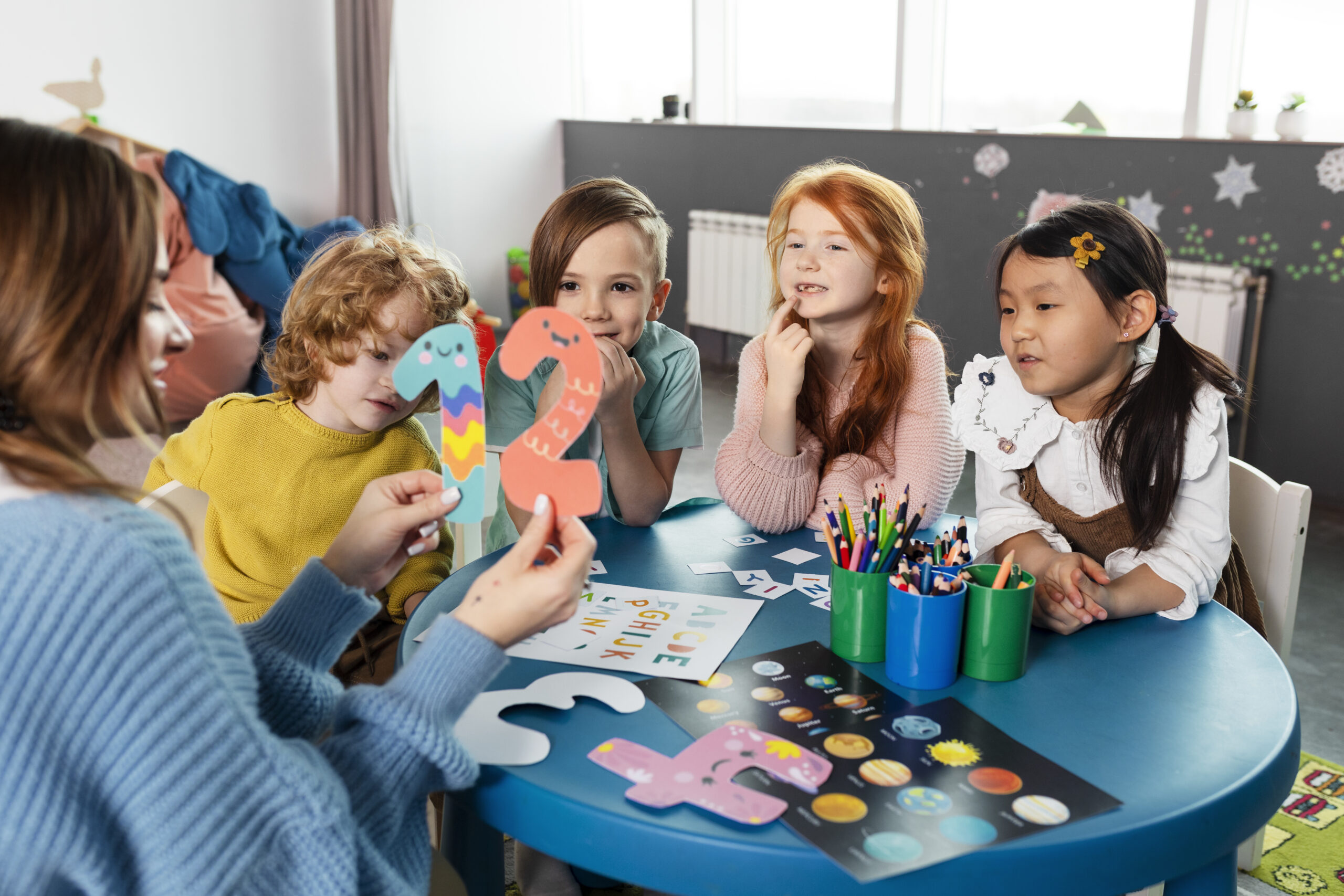
If you’re thinking about Montessori for your child, you probably have one big question:
“What does a typical day actually look like?”
And it’s a good one. Because Montessori isn’t like traditional school with rigid schedules and teacher-led lessons. It’s structured differently—and for a reason.
Let’s break down the daily routine inside a Montessori classroom so you know exactly what to expect.
1. The morning arrival: Calm, not chaos
Forget the loud bell and morning rush. In Montessori, mornings start with:
- A warm welcome from the teacher.
- Children putting away their belongings independently.
- A calm transition into the classroom environment.
This sets the tone: respect, order, and independence from the first moment of the day.
Pro tip: Many Montessori schools encourage parents to keep drop-off short and positive—it helps children settle in faster.
2. The work cycle: 2–3 hours of deep focus
This is the heart of Montessori. Each morning, children dive into an uninterrupted work period (usually 2–3 hours).
During this time, you’ll see:
- Children choosing activities that interest them.
- Teachers observing, guiding, and introducing new lessons individually or in small groups.
- Kids working alone or collaborating—depending on what they need.
Fact: Research shows children in Montessori classrooms spend more time in deep concentration compared to peers in traditional schools. This builds focus, self-discipline, and problem-solving.
Think of it as the opposite of constant interruptions—kids actually get time to explore and master skills.
3. Snack and outdoor play: Balance matters
After the work cycle, it’s time for a break. Children may:
- Have a healthy snack (often served family-style to build independence).
- Head outside for unstructured play, physical activity, and fresh air.
Why it matters: Montessori emphasizes the whole child—intellectual, physical, social, and emotional growth. Play and movement aren’t “extra.” They’re essential.
4. Group time: Stories, songs, and sharing
Yes, Montessori values independence, but group activities are part of the mix too.
This might include:
- Circle time with songs or storytelling.
- Cultural lessons about geography, history, or science.
- Group discussions that build social and communication skills.
It’s about learning to listen, share, and collaborate—skills every child needs.
5. Lunch and rest: Self-care as learning
Lunch is another chance for independence. Children often:
- Set the table.
- Serve themselves.
- Clean up afterward.
For younger children, nap or quiet time follows. For older ones, rest may mean reading or calm activities.
6. Afternoon work and enrichment
The afternoon mirrors the morning work cycle, with more opportunities for:
- Independent exploration.
- Teacher-guided lessons.
- Enrichment activities like art, music, or practical life skills.
This balance of structured and self-directed work keeps kids engaged and motivated throughout the day.
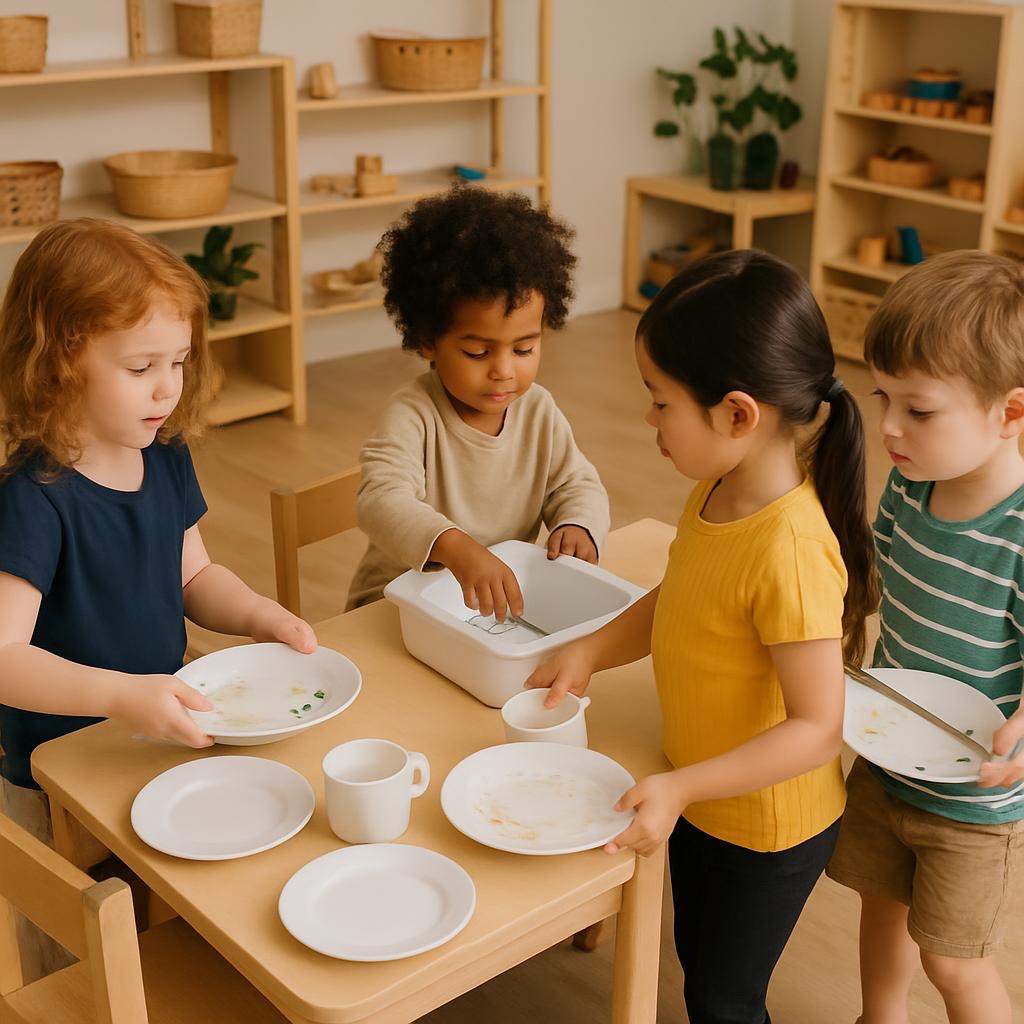
7. Closing the day: Responsibility in action
Before dismissal, children:
- Put materials back in their place.
- Tidy the classroom.
- Reflect on their work (sometimes through journaling or sharing).
It’s not just clean-up. It’s about teaching responsibility, respect for the environment, and closure to the day.
Why the Montessori routine works
The daily routine in a Montessori classroom may look different, but it’s intentionally designed to:
- Build independence and confidence.
- Allow deep focus through long work periods.
- Balance academics with social, emotional, and physical growth.
- Teach responsibility through everyday actions.
The result? Children who aren’t just prepared for school, but for life.
FAQs: Montessori Daily Routine
Q: Do Montessori classrooms have strict schedules?
Yes and no. The structure is predictable, but children have freedom within it to choose activities and work at their own pace.
Q: How long is the Montessori work cycle?
Typically 2–3 hours in the morning and another in the afternoon.
Q: Is there playtime in Montessori?
Absolutely. Outdoor play, movement, and free exploration are built into the day.
Q: How do younger and older children manage the same routine?
Mixed-age groups mean younger kids learn routines by observing older peers, while older kids build leadership skills.
Key Takeaway
A Montessori classroom isn’t chaotic—it’s carefully structured to balance freedom with responsibility.
Children move through a day filled with focus, exploration, play, and community. The daily routine teaches them not just what to learn, but how to learn, setting them up for lifelong success.
Bottom line: If you want your child to thrive in an environment that values independence, curiosity, and growth, Montessori’s daily routine delivers exactly that.